One of the most common frustrations I hear from kindergarten and early elementar...
Lorem ipsum dolor sit amet, consectetur adipiscing elit. Curabitur luctus venenatis magna at porttitor. Etiam ultricies libero justo, vel interdum risus aliquet eget. Vestibulum mi ligula, tempus in convallis vel, sagittis placerat lorem.
One of the most common frustrations I hear from kindergarten and early elementary teachers is this:
“They know their letters. They know their sounds. But they still cannot read words.”
If that sounds familiar, you are not alone. And more importantly, this is not a failure of effort or exposure. It is almost always a breakdown in how sounds are being taught and transferred into blending.
Research has been very clear on this point.
Linnea Ehri explains that “readers must form connections between the letters in written words and the sounds in spoken words. Without these connections, words cannot be read or remembered.”
If students cannot hold onto sounds long enough to connect them, reading will continue to feel impossible no matter how many letters they know.
Lorem ipsum dolor sit amet, consectetur adipiscing elit. Curabitur luctus venenatis magna at porttitor. Etiam ultricies libero justo, vel interdum risus aliquet eget.
Lorem ipsum dolor sit amet, consectetur adipiscing elit. Curabitur luctus venenatis magna at porttitor. Etiam ultricies libero justo, vel interdum risus aliquet eget.
Lorem ipsum dolor sit amet, consectetur adipiscing elit. Curabitur luctus venenatis magna at porttitor. Etiam ultricies libero justo, vel interdum risus aliquet eget.
Before students can blend, decode, or read words, they must have a strong understanding that spoken words are made up of individual sounds that can be isolated, repeated, and remembered.
Sally Shaywitz refers to phonemic awareness as “the gateway skill,” noting that if children do not grasp that words are made up of sounds, reading will remain a struggle.
This is why sound work cannot be rushed or treated as a warm-up activity. It is the foundation everything else is built on.
When students struggle with sound retention, they need explicit modeling, consistent routines, and opportunities to hear and feel how sounds are made.
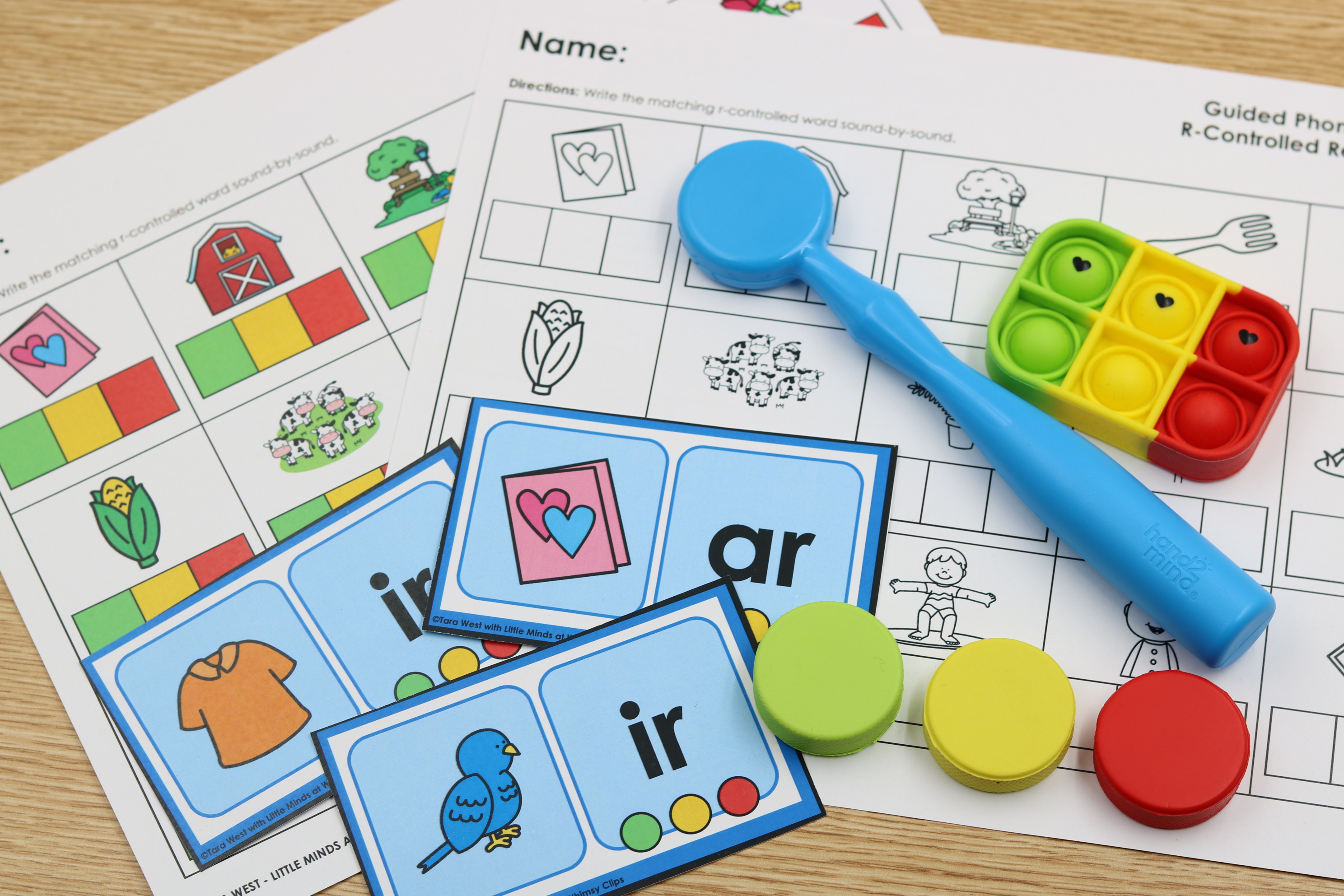
These tools help teachers slow down instruction, focus on articulation, and give students multiple ways to anchor each sound before moving to print.
One of the biggest instructional gaps I see is skipping directly from isolated sounds to CVC words.
For many students, that leap is simply too large.
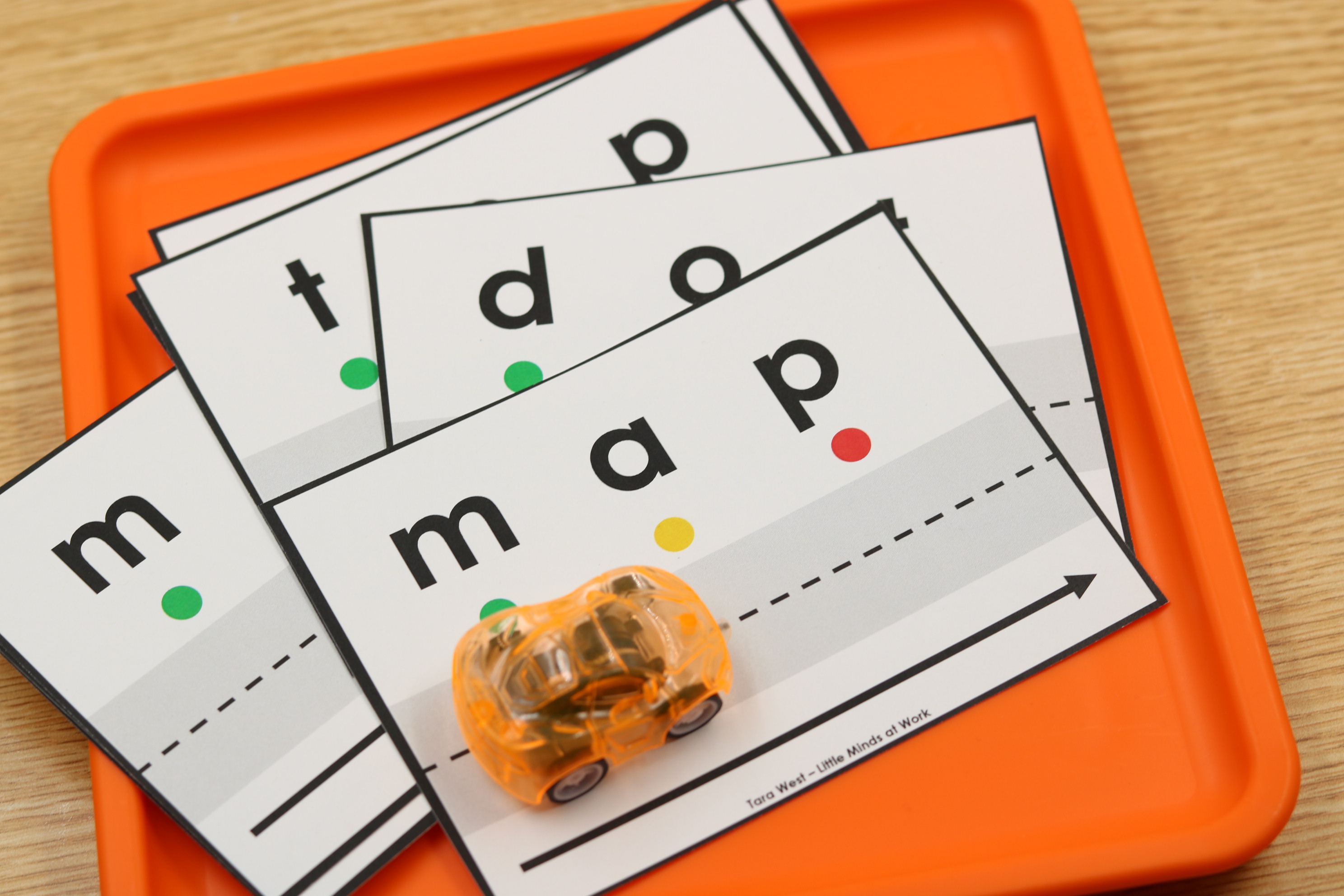
VC blending provides the bridge.
Marilyn Adams explains that “blending phonemes into words must be taught explicitly and practiced extensively, especially with simple sound structures.” VC words allow students to practice blending with minimal cognitive load while learning how sounds stick together.
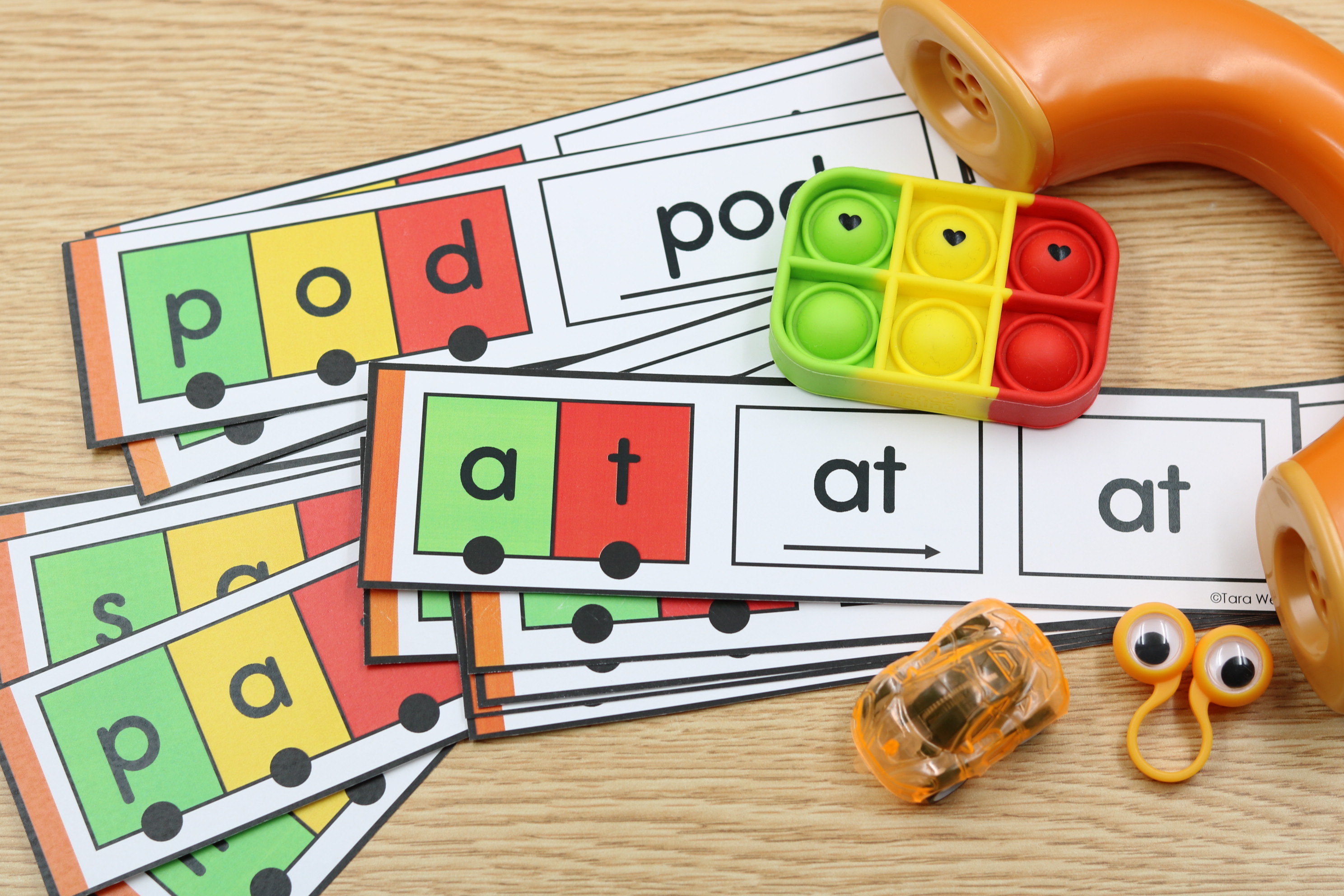
A strategy I use consistently during VC blending is physically showing the sounds moving together.
I model the vowel and consonant far apart at first:
/a/ ---------- /t/
Then, as we blend, I slowly push the letters closer together while stretching the sounds until they touch and become “at.”
This visual and physical movement helps students understand that blending is not guessing. It is sounds coming together.
 Tara West
Teacher-Author
Tara West
Teacher-Author
Tara West is a dedicated educator and the founder of Little Minds at Work, an educational platform designed to provide teachers with creative and engaging resources for early childhood education. With a focus on developing innovative lesson plans, classroom strategies, and activities, Tara brings her passion for teaching to life, empowering teachers to foster meaningful learning experiences for their students.
By Tara West
One of the most common frustrations I hear from kindergarten and early elementar...
By Tara West
Hello, passionate educators and literacy leaders! As you know, phonics instructi...
By Tara West
Welcome, dedicated educators and champions of literacy! In the ever-evolving lan...